
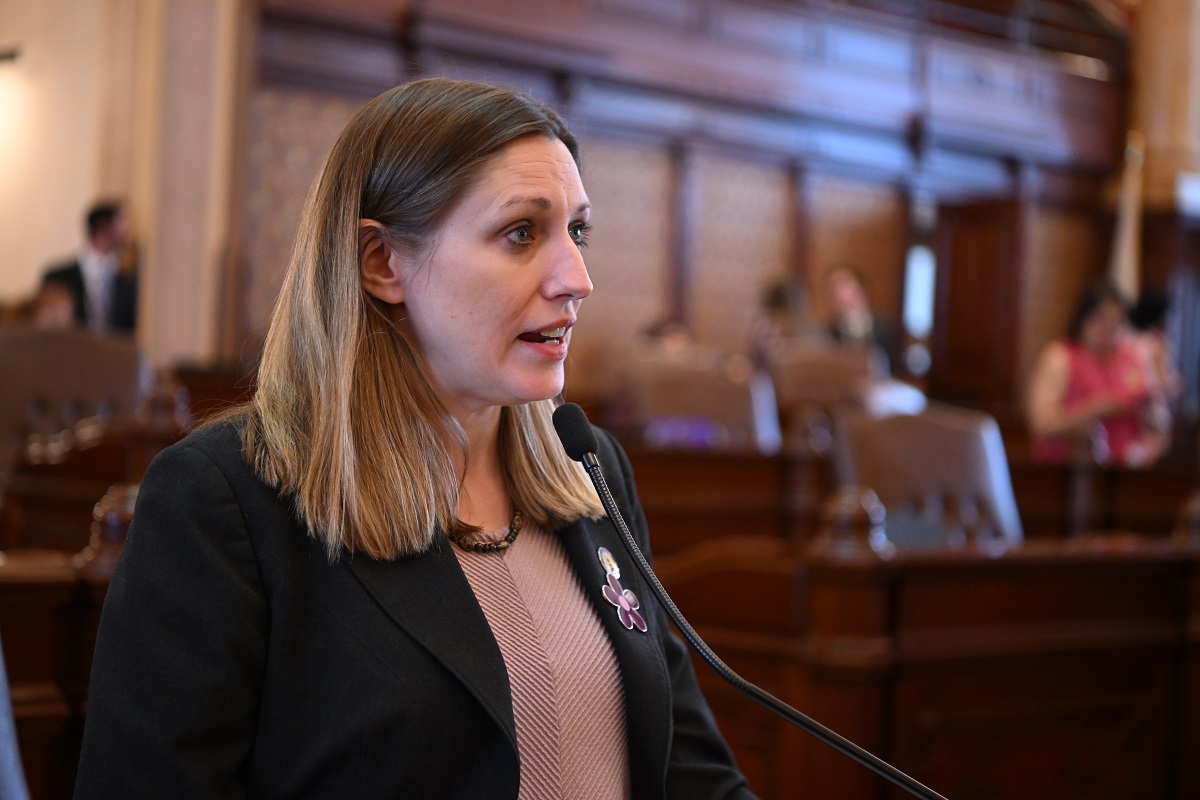
 SPRINGFIELD —A comprehensive package of legislation sponsored by State Senator Rachel Ventura aimed at protecting Illinois residents from the worst dangers of unchecked AI technology is set to be heard in the Senate AI and Social Media Subcommittee Thursday and Friday.
“As artificial intelligence technology expands and accelerates at an alarming rate, now is the time to set guardrails against potential abuses and damages before it’s too late,” said Ventura (D-Joliet). “These bills put people first by setting clear rules, increasing transparency and protecting consumers, workers and communities.”
To protect consumers from harmful and deceptive practices, Ventura introduced Senate Bill 3502, which would establish product liability standards for AI developers, ensuring systems are designed to account for foreseeable harms, require additional testing, and accountability.
“The 15-year experiment of hoping tech companies will 'do the right thing' on their own has failed,” said Steve Wimmer, Senior Technical and Policy Advisor for the Transparency Coalition. “With Senate Bill 3502, Illinois is choosing to lead the nation by establishing real legal consequences for unsafe AI design. This bill provides the guardrails our society needs to enjoy the benefits of AI without the unacceptable risks of financial, physical, or emotional harm. This is what modern consumer protection looks like.”
Ventura’s proposal also includes Senate Bill 3890, which would establish a comprehensive data privacy and artificial intelligence governance framework modeled on leading protections adopted in Minnesota and California.
The bill would grant consumers a universal opt-out mechanism for the use of their data for AI, as well the right to access, correct, delete and transfer their personal data and to opt out of targeted advertising, data sales and profiling, particularly when automated systems are used to make decisions affecting housing, employment or other significant life outcomes.
It would require businesses to minimize data collection, obtain affirmative consent for sensitive data, conduct risk assessments for high-risk AI systems and implement safeguards against bias and discrimination – with heightened protections for children and vulnerable populations.
The legislative package includes Senate Bill 2993 which would prohibit artificial intelligence from independently prescribing medication without human oversight by a licensed pharmacist. It also contains Senate Bill 2994 to safeguard sensitive personal data, including neural and biometric information collected by consumer devices such as health apps, sleep trackers and wearable technology. By extending privacy protections to emerging forms of neuro-data, the legislation would prevent companies from exploiting deeply personal biological information without meaningful consent.
Senate Bill 2995 would strengthen transparency and accountability around AI use by requiring disclosure when individuals are interacting with an AI system, whether through chat, phone, email or drive-thru services, and guaranteeing access to a human upon request. Another measure, Senate Bill 3364, would expand notice requirements when AI is used in decision-making processes, such as housing or employment determinations, while Senate Bill 3180 would prohibit companies from training AI systems on user content by default without clear, separate consent.
The package also includes Senate Bill 3264, or the Illinois Online Safety Act, which would strengthen protections for youth on social media platforms by requiring cyberbullying prevention policies and the creation of Online Safety Centers.
Recognizing the growing environmental and community impacts of AI infrastructure, Ventura also introduced Senate Bill 3830, which would require data centers and AI operators to secure long-term water and carbon-free energy plans, monitor and report resource usage, mitigate community harms and comply with decommissioning and e-waste standards.
“We are already beginning to see the damage unchecked and unregulated AI development can have on individuals, communities, and the environment,” Ventura said. “The legislature must act to protect the best interests of people over those of big tech companies. Illinois can lead by setting smart, balanced guardrails that protect people while allowing technology to serve the public good.”
The measures in this package await further consideration.