Originally published by The Edwardsville Intelligencer on Aug. 1, 2026.
In a republic, power is supposed to belong to the people.
Voters are supposed to decide who represents them. Candidates are supposed to make their case to the public. Elections are supposed to be contests of ideas, records, and trust.
In Illinois, election law is built around political parties before it is built around voters.
Before voters ever get a chance to make their choice, candidates must survive party ballots, party petitions, party signature rules, and party primaries that give the Democratic and Republican parties enormous control over who realistically reaches voters.
The rules do not treat all candidates the same. Established Democrats and Republicans have a much better chance of making the ballot. Independents, third-party candidates, and outsiders have a much harder time getting there.
For much of the past year, I have written about the burden candidates face getting on the ballot and about candidates removed for technical mistakes. Those are symptoms of a much larger problem.
At its core, it does not matter if a candidate has support if that support does not come from the right place.
That is not just an opinion. It is the structure the Illinois State Board of Elections described in its own federal court filing.
Andy “Hood Candidate” Williams Jr. attempted to make the 2026 Republican primary ballot as a candidate for attorney general, but fell short of the required number of signatures. He filed a lawsuit against the Illinois State Board of Elections and others challenging the state’s ballot-access requirements.
In response, the State Board laid out the rules plainly: Democratic and Republican statewide candidates must collect 5,000 to 10,000 signatures from voters affiliated with that party. New-party and independent statewide candidates generally need 25,000. All candidates have 90 days.
The state's own filing shows the problem clearly: Illinois does not treat ballot access as a simple question of whether a candidate has support. It first asks what kind of candidate that person is — Democrat, Republican, independent, or third-party — and then applies different rules. That leaves voters with fewer choices.
Ventura’s Equal Ballot Act would open Illinois primaries
Fortunately, one state lawmaker has proposed a way to attack that problem directly.
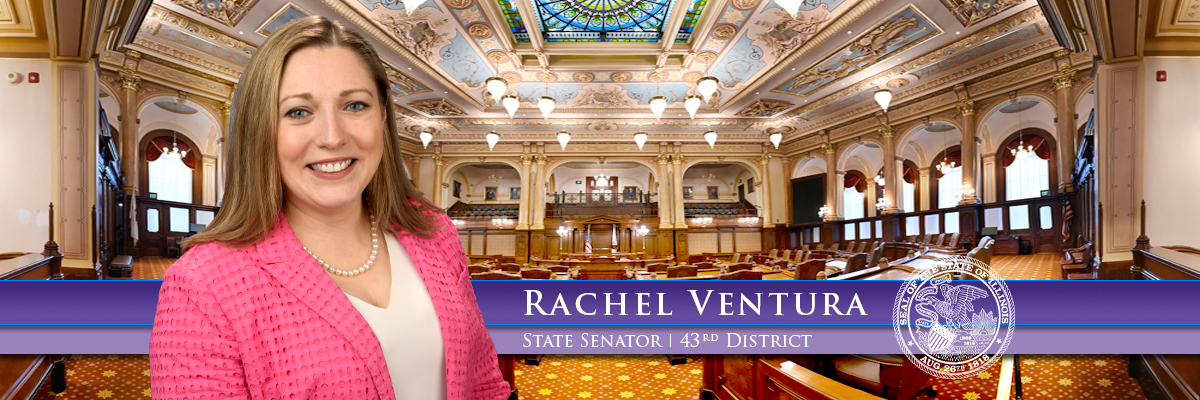
State Sen. Rachel Ventura, a Democrat representing Joliet, Bolingbrook, and the rest of Illinois’ 43rd District, introduced the Equal Ballot Act, which would eliminate partisan primaries in favor of what she called “a real, true open primary.”
“I think we have a very unfair system,” Ventura said in an interview with The Intelligencer.
Her proposal would replace partisan primaries with a single open primary. Democrats, Republicans, independents, nonpartisan candidates, and third-party candidates would appear on the same ballot. The top two finishers would advance to the general election, regardless of party.
“People want to see all of the names on their ballot,” Ventura said. “They want to consider what all of their options are. So I would rather move in that direction.”
Her bill also would address the signature requirements candidates must meet before voters ever see their names.
“So in my opinion, if we want to be more fair, and you're going to have these signature requirements, that's fine, but then everyone should have the same signature requirements,” Ventura said.
Why the open-primary bill went nowhere
Ventura's bill would put more power back in the hands of voters. But to do that, it would take power away from lawmakers and political parties that already benefit from the system as it exists.
And that's likely why Ventura's bill didn't even get serious consideration.
“That bill didn't even get a subject hearing this year,” Ventura said. “There's Republicans and Democrats who would like that bill to never see the light of day.”
Why would lawmakers refuse to consider a bill that gives voters more choices?
“The easiest answer is money,” Ventura said.
Under the current system, candidates can target reliable party-primary voters instead of trying to reach a broader electorate. An open primary would make that harder.
“You do have to have conversations with people who aren't your party,” Ventura said. “You might learn a few things. You might tailor some of your views to what the rest of your district is representing.”
But money is only part of the opposition. Ventura's bill would also make it harder for incumbents to keep their seats.
Candidates should have to persuade people who do not already agree with them. Incumbents should have to defend their records. Parties should have to earn support instead of relying on rules that make competition harder.
“The people are afraid to lose their seats or to be challenged in an area they're not currently being challenged at because the party dissuades that type of competitiveness,” Ventura said. “But I'm here for the democracy, not for the party.”
The people with the power to make reform a priority — Gov. JB Pritzker, House Speaker Chris Welch, and Senate President Don Harmon — should be pressed until Ventura's bill gets the debate voters deserve. Leading Republicans Darren Bailey, Tony McCombie, and John Curran must also prioritize this bill or provide a serious alternative.
The Intelligencer will be asking all six leaders whether they plan to give the bill the attention it deserves, or to explain why they will not. A bill that gives voters more control should not disappear without the people in power explaining why.